
About Us
Contrary to popular belief, Lorem Ipsum is not simply random text. It has roots in a piece of classical Latin literature from 45 BC, making it over 2000 years old.
Please fill out the form below and we will get back to you as soon as possible.
Contrary to popular belief, Lorem Ipsum is not simply random text. It has roots in a piece of classical Latin literature from 45 BC, making it over 2000 years old.
Advanced tumor removal procedures are specialized surgical techniques used to treat complex, large, or advanced-stage tumors in various parts of the body, especially in the head and neck region.
Advanced tumor removal procedures are specialized surgical techniques used to treat complex, large, or advanced-stage tumors in various parts of the body, especially in the head and neck region. These procedures aim to completely remove cancerous tissue while preserving vital structures, functions, and appearance as much as possible.
With modern technology and expertise, surgeons can achieve precise tumor removal even in challenging cases.
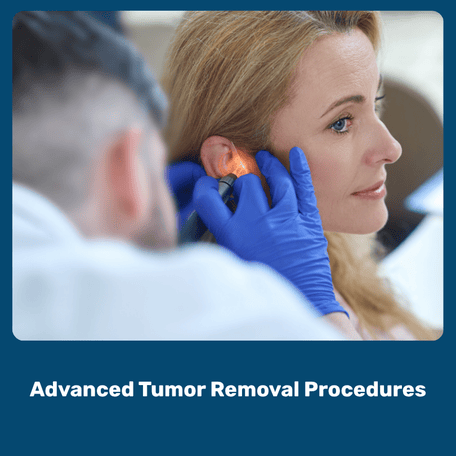
These procedures are recommended for complex and advanced tumor cases where specialized surgical expertise is required.
Presence of large or aggressive tumor growth
Stage III or Stage IV cancer conditions
Tumor affecting nearby tissues or organs
Cancer returning after previous treatment
Tumors near nerves, vessels, or vital organs
Early planning and expert surgical care are essential for successful treatment and better outcomes.
Symptoms may vary based on location, but early recognition is crucial for timely diagnosis and treatment.
Persistent lumps or unusual swelling in the body
Ongoing pain in the affected area
Difficulty swallowing or breathing
Unexplained or sudden weight loss
Changes in voice or speech patterns
Sores or lesions that do not heal
Before surgery, doctors perform detailed evaluations to determine the best treatment approach.
Initial physical assessment to evaluate symptoms and detect abnormalities.
Tissue sample is collected to confirm the type and nature of the tumor.
Imaging tests to determine tumor size, location, and spread.
Helps in staging the cancer and identifying spread to other parts of the body.
Evaluates overall health and fitness before planning surgery.

Advanced tumor removal procedures offer precise treatment for complex and advanced cancers while preserving vital functions. If you are diagnosed with a tumor or experiencing concerning symptoms, consult our specialists without delay for expert evaluation and personalized treatment.
Recovery after advanced tumor removal requires careful monitoring, rehabilitation, and follow-up for optimal outcomes.
Typically 5–14 days depending on the complexity of surgery.
Healing progresses gradually with continuous monitoring and medical care.
Physiotherapy or rehabilitation may be required for functional recovery.
Follow-ups help monitor healing and ensure cancer control.
They are specialized surgeries designed to remove complex or advanced tumors safely.
Not always, but surgery is often the primary treatment depending on tumor type and stage.
Recovery may take weeks to months depending on the complexity of the surgery.
Yes, when performed by experienced surgeons using advanced techniques.
There is a risk, but combined treatments and follow-ups help reduce recurrence.