Parotid Tumor Surgery with Facial Nerve Preservation
Parotid tumor surgery, also known as parotidectomy, is a procedure performed to remove tumors from the parotid gland — the largest salivary gland located near the ear and jaw.
What Is the Parotid Gland and Why Does It Matter?
The parotid gland is the largest of the three major salivary glands, located just in front of and below each ear, extending towards the jaw. It produces saliva that aids digestion and oral health. What makes the parotid gland surgically unique — and consequential — is its intimate anatomical relationship with the facial nerve (cranial nerve VII).
The facial nerve runs directly through the substance of the parotid gland and branches out to control all voluntary movements of the face, including blinking, smiling, raising the eyebrows, and closing the mouth. Any surgical procedure on the parotid gland must account for this nerve at every step. Damage to it can result in temporary or permanent facial weakness or paralysis — an outcome that is both functionally debilitating and psychologically devastating.
When Is Parotid Surgery Required?
Parotid surgery may be recommended when a tumor shows suspicious features, causes symptoms, or continues to grow. Early evaluation helps ensure the best treatment outcome while protecting facial nerve function.
New or Growing Lump
A painless lump near the ear, jaw, or cheek that is newly noticed or increasing in size.
Facial Pain or Weakness
Facial pain, tingling, numbness, or weakness associated with a parotid gland mass.
Rapid Growth
A previously known lump that has started growing quickly over a short period.
Suspicious FNAC Results
Fine needle aspiration cytology (FNAC) showing malignant or indeterminate cells.
Abnormal MRI or CT Scan
Imaging findings that suggest a suspicious parotid lesion requiring further treatment.
Deep Lobe Tumour
Deep lobe parotid tumors causing an intraoral bulge, swallowing difficulty, or discomfort.
Symptoms of Parotid Gland Tumours
Most parotid tumors grow slowly and are initially painless. Recognizing these symptoms early can help ensure timely diagnosis and treatment.
Painless Lump
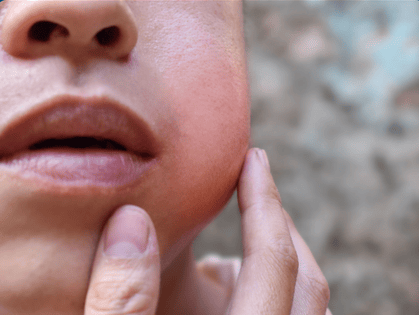
A painless lump near the ear, in front of the ear, or over the angle of the jaw is the most common symptom.
Facial Swelling
One side of the face may appear fuller or swollen, causing noticeable facial asymmetry.
Facial Weakness
Drooping of one side of the face, difficulty smiling, or inability to fully close the eye may indicate nerve involvement.
Trismus
Difficulty opening the mouth due to pressure from a deep lobe parotid tumour on nearby jaw muscles.
Intraoral Bulge
Deep lobe tumors may present as a bulge in the soft palate or tonsillar area inside the mouth.
Pain
Pain is usually a late symptom and may suggest malignancy or rapid tumour growth.
Skin Changes
Redness, skin fixation, or changes over the parotid mass may indicate a malignant tumour.
Types of Parotid Surgery
Different surgical approaches are used depending on the location, size, and nature of the tumor.
Superficial Parotidectomy
Removal of the outer part of the gland where most tumors occur, with careful preservation of the facial nerve.
Total Parotidectomy
Complete removal of the parotid gland in cases of deep or malignant tumors.
Nerve-Sparing Surgery
Advanced surgical techniques with intraoperative nerve monitoring to protect the facial nerve.
Facial Nerve Preservation
Special care is taken to preserve facial movements and prevent nerve damage during surgery.
Recovery After Parotid Surgery — What to Expect
Most patients recover smoothly after parotid surgery. Understanding the recovery process helps set realistic expectations and supports a faster return to daily life.
Hospital Stay
Most patients stay in the hospital for 2–4 days. A surgical drain is placed to prevent fluid collection and is usually removed before discharge.
Pain Management
Mild to moderate post-operative pain is expected and is effectively controlled with standard pain medications. Severe pain is uncommon.
Swelling
Mild swelling of the face and neck is normal after surgery and gradually improves over 2–4 weeks.
Temporary Facial Weakness
Some patients may notice mild weakness of facial muscles, especially the lower lip. This usually resolves within 4–12 weeks.
Frey's Syndrome
A small number of patients develop sweating or flushing of the cheek while eating months after surgery. Effective treatment options are available if needed.
Scar Healing
The incision is placed in natural skin creases around the ear and upper neck, allowing the scar to heal discreetly in most patients.
Return to Work
Most patients can return to desk-based work and routine daily activities within 1–2 weeks.
Driving & Exercise
Driving, light exercise, and most physical activities can usually be resumed within 2–3 weeks after surgery.
Frequently Asked Questions (FAQ)
What is parotid tumor surgery (parotidectomy)?
Parotidectomy is the surgical removal of part or all of the parotid gland to remove a tumor. The primary goal is complete tumor excision while preserving the facial nerve, which controls facial movements. The procedure is performed under general anaesthesia and typically requires a 2–4 day hospital stay.
Is a parotid lump always cancerous?
No. Approximately 75–80% of parotid tumors are benign, with pleomorphic adenoma being the most common type. However, every parotid lump should be evaluated by a specialist because imaging (MRI) and often FNAC are needed to determine whether the tumor is benign or malignant.
Is facial nerve preservation always possible in parotid surgery?
In most cases, particularly for benign tumors, the facial nerve can be completely preserved. Advanced surgical techniques and intraoperative nerve monitoring help minimise nerve injury. In some malignant tumors where the nerve is directly involved, partial or complete nerve sacrifice may be necessary to achieve cancer clearance.
What is intraoperative nerve monitoring (IONM)?
Intraoperative nerve monitoring (IONM) uses electrodes placed in facial muscles to provide real-time audio and visual feedback during surgery. It helps identify the facial nerve, avoid accidental injury, and confirm nerve integrity before completing the procedure. It is considered the international standard of care for parotid surgery.
What is the difference between superficial and total parotidectomy?
Superficial parotidectomy removes only the outer lobe of the gland and is commonly performed for benign tumors. Total parotidectomy removes both superficial and deep lobes and may be required for deep lobe tumors or extensive malignancies. Facial nerve preservation remains a priority whenever feasible.