Sinonasal & Skull Base Tumor Surgery in Noida
Specialized treatment for sinonasal tumors, skull base tumors, and complex head & neck cancers by Dr. Vimmi Gautam at Medanta Hospital, Noida. Advanced endoscopic skull base surgery, minimally invasive tumor removal, reconstruction, and multidisciplinary cancer care focused on preserving function and improving long-term outcomes.
Sinonasal & Skull Base Tumor Surgery
Sinonasal and Skull Base Tumors are rare growths that develop in the nasal cavity, paranasal sinuses, or the base of the skull. Due to their proximity to critical structures such as the eyes, brain, cranial nerves, and major blood vessels, these tumors require highly specialized head and neck cancer surgery expertise. Early diagnosis and timely treatment are essential to achieve the best possible outcomes while preserving vital functions.
Modern surgical techniques, including endoscopic skull base surgery and advanced skull base reconstruction methods, have significantly improved the safety and effectiveness of treatment. Patients with sinonasal tumors, skull base tumors, and head and neck cancers can benefit from personalized treatment plans designed to maximize tumor removal while preserving important functions. With careful planning and multidisciplinary care, many patients can achieve excellent tumor control and quality of life.
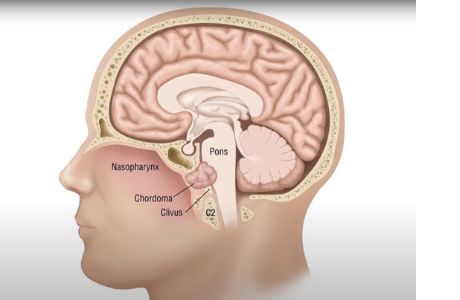
What Are Sinonasal & Skull Base Tumors?
Sinonasal tumors originate in the nasal cavity or paranasal sinuses, while skull base tumors develop at the bottom of the skull where the brain rests. These tumors can be benign or malignant and often require specialized diagnosis and treatment.
Sinonasal Squamous Cell Carcinoma
The most common malignant tumor arising from the lining of the nasal cavity and paranasal sinuses.
Adenocarcinoma
A gland-forming cancer that develops in the mucus-producing cells of the sinonasal tract.
Esthesioneuroblastoma
Also called olfactory neuroblastoma, this rare tumor arises from smell-related nerve cells.
SNUC
Sinonasal Undifferentiated Carcinoma is an aggressive cancer requiring prompt multidisciplinary treatment.
Mucosal Melanoma
A rare melanoma that develops in the mucosal lining of the nasal passages and sinuses.
Inverted Papilloma
A benign but locally aggressive tumor with a tendency to recur and occasionally become cancerous.
Meningioma
Usually a benign tumor arising from the membranes surrounding the brain and spinal cord.
Pituitary Tumors
Tumors affecting the pituitary gland, often causing hormonal imbalances and vision problems.
Chordoma
A rare tumor arising from remnants of the embryonic notochord at the skull base.
Juvenile Nasopharyngeal Angiofibroma
A highly vascular benign tumor that commonly affects adolescent males.
Fibrous Dysplasia
A benign bone disorder that can affect the skull base and surrounding facial bones.
Symptoms of Sinonasal & Skull Base Tumors
The symptoms of sinonasal and skull base tumors often resemble common sinus conditions, which can delay diagnosis. Persistent or worsening symptoms should always be evaluated by a specialist.
- Persistent nasal blockage on one side
- Frequent nosebleeds
- Facial pain or pressure
- Loss or reduction of smell
- Chronic sinus infections
- Persistent headaches
- Double vision or blurred vision
- Swelling around the eyes
- Facial numbness
- Hearing changes
- Difficulty breathing through the nose
- Unexplained facial swelling
Diagnosis and Evaluation
Accurate diagnosis is essential for effective treatment planning. A comprehensive evaluation helps determine the tumor type, extent of disease, and involvement of nearby structures, allowing for a personalized treatment approach.
Detailed Medical History & Examination
Comprehensive assessment of symptoms, medical history, and physical findings.
Nasal Endoscopy
Direct visualization of the nasal cavity and sinus passages using a specialized endoscope.
Contrast-Enhanced CT Scan
Provides detailed information about bone involvement and tumor extent.
MRI Scan
Offers superior visualization of soft tissues, nerves, and skull base structures.
PET-CT Scan
Recommended when indicated to assess tumor spread and overall disease staging.
Image-Guided Biopsy
Tissue sampling helps establish a definitive diagnosis and treatment strategy.
Neurological Assessment
Evaluates nerve function and possible involvement of cranial nerves by the tumor.
Ophthalmological & Pathological Evaluation
Eye assessment and detailed pathological examination of tumor tissue guide treatment decisions.
Frequently Asked Questions
Is sinonasal tumor surgery safe?
Yes. Advances in imaging, surgical navigation, endoscopic technology, and skull base reconstruction have significantly improved the safety and success of these procedures.
Will surgery leave visible scars?
Many sinonasal and skull base tumors can be removed using minimally invasive endoscopic techniques through the nostrils, avoiding external facial incisions and visible scars.
Are all sinonasal tumors cancerous?
No. Some sinonasal tumors are benign, while others are malignant. Accurate diagnosis through imaging and biopsy is essential to determine the nature of the tumor.
Can skull base tumors affect vision?
Yes. Depending on their location and size, skull base tumors may compress nerves responsible for vision and eye movement, leading to visual disturbances.
Is radiation therapy required after surgery?
Some malignant tumors may require radiation therapy or combined treatment after surgery. The decision depends on the final pathology report, tumor type, and stage of disease.